
A political campaign video is the single most powerful tool you have to communicate with voters — but most candidates get it completely backwards, spending their energy on production before they’ve figured out what to say. In this blog post, political consultant Jay Townsend shares the counter intuitive secret that separates great campaign videos from forgettable ones, walks through the five elements every script must include, and tells the story of a candidate whose video was so compelling it launched a political career.
A campaign video is the most effective tool you will ever have to communicate with voters. Here’s a secret that may surprise you: great footage will not save a bad script, but a great script will survive bad footage. The first job in making a great campaign video is to write the script. That happens before you do anything else — because otherwise, you are wasting your time.
Before you write a single word, sit in the chair of the voter who is going to watch it. What does that voter want to know about you? That question is what drives everything.
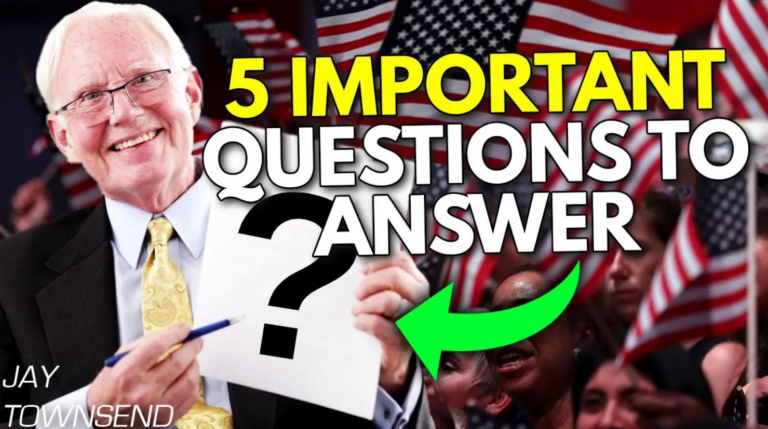
Voters watching your campaign video are looking for answers to five specific questions. First, what makes you qualified — what have you done in your private or professional life that gives you the right to ask for the power to make decisions on their behalf? Second, what is your moral code — are your values in sync with theirs? Do you care about the same things they care about? Veterans, hungry children, seniors who can’t afford their medication — these are not just policy positions, they are signals about who you are. Third, what are you going to do for them — what problem will you solve, what wrong will you right, what injustice will you correct, what will you do to elevate their standard of living? Fourth, what story can you tell — what happened in your life that now makes you passionate about asking for the power to fix a particular problem, and how do they know they can trust you to make the right decisions when they’re not watching? Fifth, what makes you better than your opponent — make this choice easy for the voter to comprehend.
The secret of a campaign video is to blend all five of those components into a script that runs about two to two and a half minutes — roughly 300 words. That is the limit for a good political candidate video. Think of it like baking a cake: some ingredients are small portions, some are larger. But if you leave any of the five out entirely, the cake does not bake properly.
Personally, I like starting campaign videos with a story — something that explains, beyond any doubt, why a candidate is running for office. You don’t have to structure it that way, but a story is the most powerful hook available because it immediately answers the question voters are most suspicious about: are you running for the right reasons?
Let me give you a real example. I was once working with a candidate running for the U.S. Senate — he happened to be Asian — and I asked him: “What is the first thing you remember in your life? Something that happened at a point where you can’t remember anything that came before it.” He said, without hesitating: “That’s easy. It was cold water running over my butt.” I said, “What was the occasion?” He said, “I was swimming across the Mekong River.” I said, “Why, at two years old, were you swimming across the Mekong River?”
He explained: his father had been a farmer in Laos who sided with the Americans during the Vietnam War. When the Communists took control of the country, his father ended up on a hit list — and knew that if he didn’t get out, he and his family would be killed. So one night, they set out through the woods — for three days until they reached the Mekong River. He was tied to six other family members by a rope, crossing the river in the dark, in cold water, with his father talking about the lights of freedom on the other side in Thailand. They made it across. They went into a refugee camp. Seven years later, someone came to his father and said: you’ve been offered a chance to live in the United States. Do you want to go?
And then the candidate looked at me and said: “Everything I have, every breath I take, every bit of freedom I enjoy, every dime in my bank account — I owe to the United States of America. And I’m running for this job because America is the leader of the free world, and for the sake of all humankind, we have to preserve the American democracy.” The moment he said that, I knew I had the video.
We opened with that story. And I can tell you — because we can measure exactly how long people watch a video before they leave — that viewers stayed with it all the way through. The story hooked them. He went on to talk about his restaurant, his small business, his family, how he had served his community, what he stood for, and the policy reasons he wanted to be a U.S. senator. He came up short in that race, largely due to money. But what the video accomplished was remarkable: it created a group of people who absolutely loved what he had to say. Party leaders and others now know who he is, and he is at the top of the list of potential recruits for a future race.
Within your roughly 300 words, move the five elements around to create a script that draws the viewer in with a story, then gives them just enough about your background and qualifications to know you’re serious, then talks about the problems you’re going to solve and why you care about fixing them, and wraps up with what I call your unique selling proposition — the things you can say that no one else can, the things you will fight for that your opponent won’t. Leave voters with a clear, simple choice. That is how I organize campaign videos, and I know they work because I have done dozens of them.
Once you have the script written, storyboard it — decide what scenes and footage you’ll show to accompany each section of the script. Then hire a crew and go shoot. Spend far more time on the script than on the shoot. That is where the work is, and that is where the result is determined.
One final thing about the actual delivery: when you speak on camera, say it like you mean it. If it sounds like you are reading a script, you will bore your audience and lose them. Voters need to feel your conviction. They need to know you are committed to what you are saying — and they will know by the tone of your voice.
Q: How long should a political campaign video be?
A: Two to two and a half minutes is the sweet spot — roughly 300 words of spoken script. Shorter than that and you don’t have room to cover all five elements meaningfully. Longer than that and you start losing viewers who have already decided whether they’re interested. The goal is to give voters enough to feel like they know you and trust you, without asking more of their attention than they’re willing to give.
Q: Do I need a professional film crew to make a good campaign video?
A: Not necessarily — but the script must be excellent regardless of production budget. A smartphone with decent lighting and a good microphone can produce very watchable footage if the script and delivery are strong. Conversely, a beautifully produced video with a weak script and a candidate who sounds like they’re reading will underperform every time. If budget is limited, invest in help with the script before you spend on production.
Q: What if I don’t have a dramatic personal story like the Mekong River example?
A: Almost every candidate has a story — it just takes some digging to find it. Think about what first made you care about the issue you’re running on. Was there a moment when something in your community frustrated or outraged you? A time when you saw someone treated unfairly? A local problem that you watched go unsolved for years? The story doesn’t need to be dramatic — it needs to be genuine. Voters are remarkably good at detecting sincerity, and a quiet, honest story often lands harder than a spectacular one.
Q: How do I know if my video script is working?
A: The clearest signal is viewer retention data. When you post your video on YouTube or Facebook, both platforms show you exactly how long people watch before they leave. If you’re losing viewers at the 20- or 25-second mark, your opening isn’t hooking them. If people are making it to the 60-second mark and then dropping off, something in the middle section isn’t holding their attention. Use that data to revise — it tells you more honestly than any focus group what’s working and what isn’t.
Q: Should I mention my opponent in my campaign video?
A: You don’t need to name them — but you should create a clear contrast. The “why you, not them” section of your script is about articulating what voters get from you that they’ll never get from whoever you’re running against: the fights you’ll take on that they won’t, the things you’ll prioritize that they don’t care about, the differences that matter. Done right, this contrast is persuasive without being negative. Done wrong — as an angry attack — it tends to make candidates look small.
Jay Townsend has spent more than 40 years advising candidates at every level of American politics. For more campaign strategy resources, visit JayTownsend.com or subscribe to Jay’s YouTube channel for new videos every week.
Copyright @ 2025 jaytownsend.com, All Rights Reserved.