
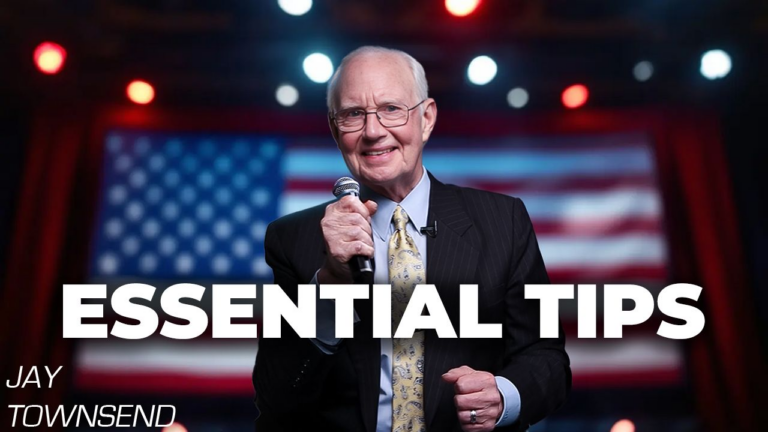
Some candidates spend a fortune and lose. Some candidates get hopelessly outspent and win. In this video, political consultant Jay Townsend explains why: the outspent candidate almost always had the better campaign message, and he breaks down the five questions every voter expects you to answer to build one.
A good campaign message will win an election. Why do I say that? Why is it that some candidates spend a fortune and lose, while some candidates who are hopelessly outspent win? The answer is that the one who was outspent had a better campaign message. At its core, your campaign message is your answers to the questions voters will expect you to answer during the course of a campaign. Let’s go through each one, what it is, and a few tips on how to answer it.
The first question is what we call your why: what are you going to do for the voters? All voters have problems, a set of values, and a view of the world — things they believe are right and wrong, injustices they see, and moments when they believe justice is served. They believe political candidates can do things that improve their quality of life, and your answer to “what are you going to do for me” should form around that.
What’s on the minds of voters in your jurisdiction? What problems seem preeminent where you’re running? What are your own ideas for improving their quality of life with the power they might give you? If you have no idea how to answer this, you will never have a coherent campaign message — it’s the first among equals of your campaign message, and if you’re not talking to voters on their terms, you’re irrelevant to them.
Here’s a secret: there’s something deep inside you that made you interested in a video like this. Somewhere along the way, you got bitten by the political bug. You weren’t born wanting to do this — something you experienced, heard, or saw made you passionate about seeking power to make a difference. If you can figure out that why, the thing fueling your motivation, the campaign gets a lot easier, because any obstacle you encounter will feel like a molehill instead of a mountain. You’ll endure the brickbats of political combat because something deep inside you won’t let an obstacle stop you. This is how candidates win elections they were supposed to lose — because of that deep passion. Figuring out your why is one of the keys to your own success.
The second question voters have is: how do I know your moral code and values are in sync with mine? You need to tell them, because if they get the notion your values are out of sync with theirs, that’s a disqualification. What are your notions of good and evil, fair and unfair, injustice and justice served? What are your notions about religion and the place of mankind in the universe? What’s the role of government — should it help people who need a hand up, or is government mostly something we’d be better off with less of? These are expressions of your values, and voters want to hear your answer because it’s how they know that when they’re not looking, they can trust you to make decisions based on a moral code that’s in sync with theirs.
The third question is what makes you qualified. Voters don’t need your entire life story or every degree and club membership — they want just enough to know your head is on straight, that you can handle responsibility, and that you’ve done something useful in your life. A degree is a qualification. A position at your company, a promotion, or an honor at work is a qualification. Have you written a book? Do you have a YouTube channel? Have you belonged to a civic or community organization where you’ve actually helped people who needed a hand up? Voters count all of that — they just need enough to know your feet are on the ground and you can handle responsibility.
The fourth question is: how do I know I can trust you? What can you tell voters that shows your heart is in the right place and that you’ll do what you’re promising if you get the power? I was once on a call with a candidate in Alabama, and when I asked her what her why was, she told me everything she’s about goes back to her early years in Sunday school, where they really dug into the Ten Commandments and what they meant. The one that hit her hardest was treat thy neighbor as thyself, and she went home thinking about it until she came to believe it at her core — that government should help people who need a hand up, get food to people who are hungry, find a warm place to live for people who are homeless, and help people who are down on their luck get going again.
She told me the people she hoped to represent were often down on their luck and needed a hand up, and that was the reason she was running. I watched her tell that story to an audience a few weeks later, and everybody in that room got it — they could trust her to do the right thing when they weren’t looking, because they knew she was grounded in that belief, and they knew why.
The fifth question voters expect you to answer is what makes you better than the people running against you. You want to answer it yourself, because otherwise you leave voters to figure it out on their own, and there’s a limit to how much time they’ll spend doing that. Make the answer crystal clear — black and white, salt and pepper — because the clearer the contrast with your opponent, the easier it is for voters to decide.
There are many ways to draw that contrast. Is your biography better suited to the job than your opponent’s? Is there a difference in moral code that would rub voters the wrong way? Do you have policy differences, differing philosophies of government, or differing positions on the issues of the day? All of these are legitimate ways to differentiate yourself from your opponent — and together with your why, your values, your qualifications, and your trustworthiness, they form the elements of a winning campaign message.
Q: Why does a good campaign message matter more than campaign spending?
A: Because voters respond to candidates who speak to them on their own terms, not simply to whoever spends the most. Jay has seen hopelessly outspent candidates win because their message answered voters’ real questions, while heavily funded candidates lost because their message never connected.
Q: What’s the first question a campaign message needs to answer?
A: What are you going to do for me? Voters want to know what problems you’ll solve and what you’ll do with the power they give you to improve their quality of life. Without a clear answer to this, you don’t have a coherent campaign message — it’s the first among equals of everything else you’ll say.
Q: Why does finding your personal “why” matter so much?
A: Because campaigns are hard, and candidates who understand the deep, personal reason they’re running can endure obstacles that would stop someone running for the wrong reasons. That passion is often what lets candidates win elections they were “supposed” to lose.
Q: What actually counts as a “qualification” to voters?
A: Not your entire resume — just enough to show your head is on straight and you can handle responsibility. A degree, a promotion or honor at work, a book you’ve written, a YouTube channel, or work with a civic organization that’s actually helped people all count as legitimate qualifications.
Q: How do I contrast myself with my opponent effectively?
A: Make the differences crystal clear — differences in biography, moral code, policy positions, or philosophy of government. Voters have limited patience for figuring out the contrast themselves, so it’s your job to make the choice between you and your opponent as black-and-white as possible.
Jay Townsend has spent more than 40 years helping candidates craft campaign messages that win. If you’re getting ready for a campaign, Jay has a free book, 12 Essential Steps to Getting Ready for a Political Campaign, available through the link in the video description, along with a full online course that walks you through building a compelling message for your own race, jurisdiction, and opponent, backed by a full money-back guarantee. Browse the full resource library at JayTownsend.com or subscribe to Jay’s YouTube channel for new campaign strategy videos every week.
Copyright @ 2026 jaytownsend.com, All Rights Reserved.