
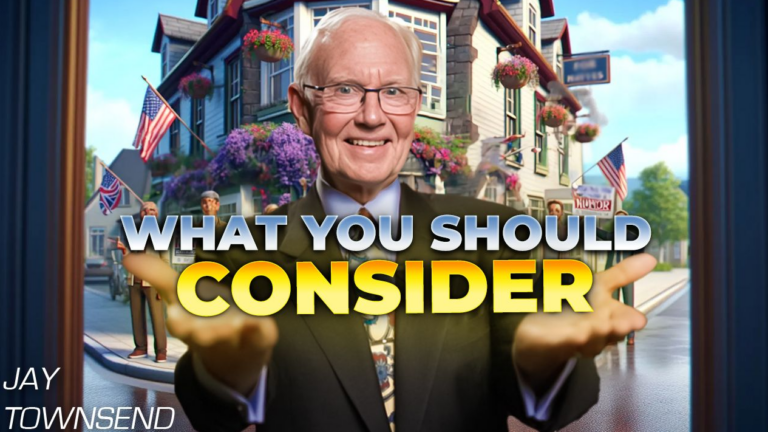
Running for mayor of a small town is nothing like running for mayor of a big city — the rules are different, the relationships are different, and the mistakes that sink candidates are completely different. In this blog post, political consultant Jay Townsend explains exactly what it takes to win a small-town mayor’s race: why integrity is non-negotiable, what the job actually requires, how to find the influential voices who can make or break your campaign, and why knocking on doors — and following up with a handwritten note — is still the most powerful campaign tool available in a small community.
Running for mayor of a small town is not like running for mayor of a big city. There is a whole different approach you must take. What we’re going to cover is the importance of integrity in a small town, the unique nature of the mayor’s job, understanding the people and the history of your community, the keys to your message, your advertising, and your fundraising.
A few years ago, I was invited to a wedding in a small town in the Midwest. A group of us got together for breakfast on a Sunday morning and we were served by a young single mother with a wicked sense of humor. We were bantering back and forth, and I asked her, “Do you like living in a small town?” She said no. I said why. She said: “Last week I went to the dollar store, and within twenty minutes, everybody in town knew everything I’d bought.”
Welcome to small towns. There are no secrets — or if there is a secret, it isn’t one for very long. Everybody knows everybody’s business. Which is why integrity is not just a campaign talking point in a small town. Your reputation is your brand, and often small town candidates find it’s baked in before the campaign starts.
Every time you are talking to someone in a small community, they are making judgments about your character. Do you keep your word? Do you keep your commitments? Do you tell the truth? Are you civil? Are you easy to get along with? Are you a good listener? All of those things determine whether you win or lose a campaign in a small town, because voters there are not inclined to hand power to someone whose character they have reasons to doubt.
I once lived in a small town. One day the garbage truck came by and didn’t pick up my trash. I don’t know how they missed it. What did I do? I called the mayor directly. Within twenty minutes, the truck was back and the garbage was gone. That is what small-town mayors do.
It is not about partisan politics. It is not about creating chaos or disruption. It is about keeping the community running smoothly so that people’s quality of life is not interrupted or turned upside down. You plow the snow. You make sure the garbage gets picked up. You make sure the water flows and the toilets flush. You make sure the sanitation system works. That is your basic responsibility.
In addition to that, many small towns in the United States are going through periods of real economic pain. Factories that once employed people are gone. Housing has aged. Schools have consolidated. In some communities, hospitals have closed. One of the underlying concerns for most small-town mayors right now is economic growth: attracting new employers who pay decent wages, and taking on initiatives that will restore the housing stock and give people genuine hope. That is where your campaign message lives — how you will maintain the services that are working, and what you will do going forward to improve people’s quality of life.
In small towns, there are influential people. I was raised in one, and I know exactly who they were: the best lawyer in town, the head of the Chamber of Commerce, the leader of the Rotary Club, the head of the United Way, the bank president, the eye doctor, the medical doctor, a few of the merchants on the town square. These were the cream-of-the-crop influencers in the community where I grew up.
It is essential that you have a few people like this in your corner when you’re running in a small town — because of how information travels. If the eye doctor likes what you have to say, the eye doctor is going to mention it to patients. If the lawyer is supporting you, clients hear about it. If the Rotary president endorses you, that message reaches every person in that room. This is how politics works in a small town. Find the influential people who are willing to support you and get them talking.
If you want to be mayor of a small town, you need to go talk to people — not just at the diner, not just at the coffee shop, not just at the donut shop. You need to go door to door. And there is a right way and a wrong way to do it.
The wrong way is to knock on a door and immediately launch into a speech about how you’re going to be the greatest mayor who ever lived. The right way is this: knock on the door, introduce yourself, and say something like, “Hey, Mabel, I’m running for mayor. I’ve got some things I’d like to accomplish, but before I even get into that — why don’t you tell me what’s on your mind? What problem are you having that you think the city might be able to help with? What good thing would you like to see happen that would make this community a better place to live?”
Your mission when you’re going door to door is to get the person to talk to you. Humans are humans, and the sweetest music most people know is the sound of their own voice. If you can get someone talking, two things happen: you learn exactly which issues move them, and they like you more than they would if you had done all the talking yourself.
When you get home after a full day of door knocking, sit down and write a brief handwritten note to every person you met that day. Two or three sentences about how much you enjoyed the conversation. If you can remember something specific about what they told you, mention it. Include your personal cell phone number and let them know they’re welcome to call if they ever have a question or a problem that needs attention. Send those notes the next morning. That combination — a genuine conversation followed by a personal, handwritten follow-up — is the single best form of political advertising available in a small-town race. Nothing beats it.
Q: How is running for small-town mayor different from running for city council or other local offices?
A: The mayor is the most visible figure in town — the person residents call when the garbage doesn’t get picked up. That visibility means your character and personal reputation carry more weight than in a ward-based council race, where voters may only know you through signage and mailers. In a small town, you are likely already known by a significant portion of your electorate. Your campaign is largely about confirming or expanding what people already believe about you.
Q: How many doors should I realistically try to knock in a small-town mayor’s race?
A: In a town where the race might be decided by a few hundred votes, knocking every eligible door is achievable with enough time and discipline. Start early — six to eight weeks before election day — and aim for twenty to thirty doors per hour. The handwritten follow-up notes are what turn those conversations into votes, so budget time for those each evening. Quality of conversation matters more than quantity of doors.
Q: Do I need to raise money for a small-town mayor’s race?
A: Usually less than in larger races, but some budget is still helpful. You’ll want printed materials — a simple palm card or door hanger — and possibly some basic signage. In very small communities, a well-executed door-knocking campaign with handwritten notes can win a race with minimal spending. In towns large enough that you can’t reach every voter personally, a modest investment in digital advertising or a mailing can fill the gap.
Q: What should my campaign message focus on in a small town with economic challenges?
A: Two things: protecting what’s working and building toward what’s better. Voters want to know that the services they depend on — roads, water, sanitation, public safety — will continue to run reliably. They also want hope: a credible, specific vision for economic revitalization, whether that’s attracting new employers, improving the housing stock, or making the town more attractive to small businesses. The more specific you can be about how you’ll pursue economic growth, the more compelling your message becomes.
Q: What if I share my cell phone number at every door and get overwhelmed with calls?
A: That is a good problem to have. Sharing your number signals accessibility and trust — qualities voters want in a mayor more than almost anything else. In practice, most people won’t call, but the fact that you offered makes a lasting impression. For those who do reach out, a prompt, helpful response builds exactly the kind of reputation that wins small-town elections and sustains a successful tenure in office.
Jay Townsend has spent more than 40 years advising candidates at every level of American politics. For more campaign strategy resources, visit JayTownsend.com or subscribe to Jay’s YouTube channel for new videos every week.
Copyright @ 2025 jaytownsend.com, All Rights Reserved.