
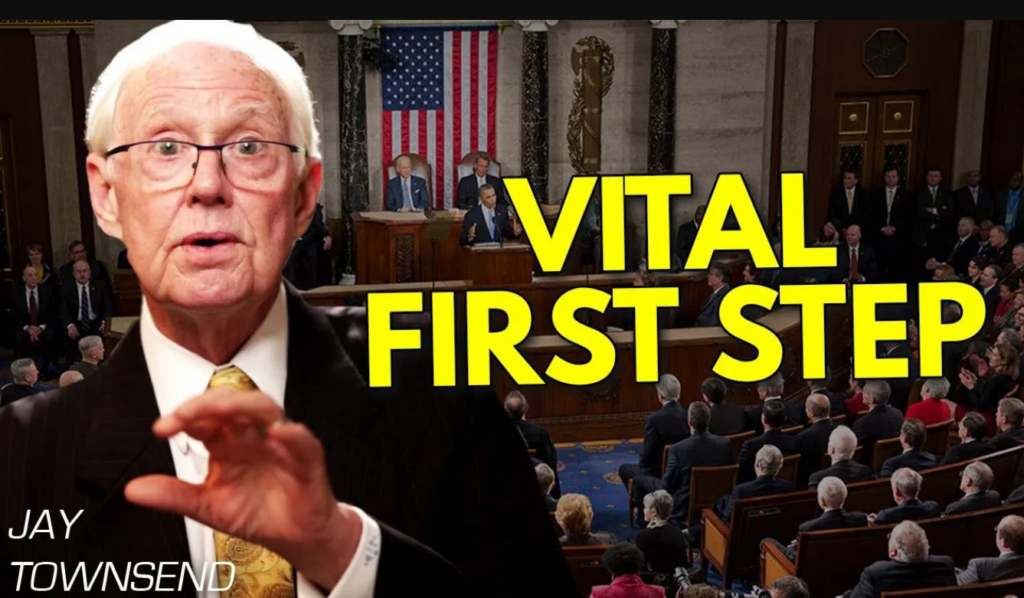
Getting started in politics is easier than most people think — if you know the steps. In this video, political consultant Jay Townsend walks through the four things that will jumpstart any political career: how to stay informed, how to find and connect with the right people, how to become an expert on the issues you care about, and how to develop the public speaking skills that every candidate needs.
Every elected office comes with power — power over the taxes people pay, the services they receive, and their quality of life. Voters are not casual about who they give that power to. If they get the impression you’re uninformed or not serious, your campaign is effectively over.
Being well-informed is not optional. It needs to be a daily habit — not something you do when you have time.
What does that look like in practice? You should have some idea of what’s happening in the world: major international events, significant national news, what’s going on in your state and in your own community. Read newspapers — or consume reliable news through whatever medium works for you — consistently enough that when someone asks you about something that happened yesterday, you have an answer.
This habit pays dividends in two ways. First, it protects you from looking uninformed in front of voters, reporters, or anyone you’re trying to impress. Second — and just as important — it makes you more impressive to the people you want to meet. When you’re building a network of influential supporters, being the person who knows what’s going on is a significant advantage.
One book worth adding to your reading list: The Art of War by Sun Tzu. Politics is civilized warfare, and the lessons Sun Tzu wrote centuries ago remain directly applicable to political campaigns today — how to take advantage of an opponent, how to create surprise, how to compete effectively when you have fewer resources. It is required reading at West Point. Every cadet has a copy. It belongs on your shelf too.
There are five groups of people who care passionately about who holds political office in your community. If you want to get started in politics, you need to introduce yourself to people in each of them.
Here’s the key insight: when you’re just starting out in politics, who you know matters far more than how many people you know. One introduction to the right person — someone who can vouch for you, contribute to your campaign, or connect you to their own network — is worth more than a hundred names you’ve collected from some random source. Build quality first. Quantity follows.
Newspapers report problems. That’s their nature — crisis, injustice, suffering, things that need to be fixed. As you develop the habit of reading the news, you should be building a list of the problems you care most about. And the office you run for should be the one that gives you the power to address them.
But knowing the name of a problem is not enough. If you’re passionate about ending homelessness in your community, you need to be able to talk knowledgeably about how to actually do it. If you want to lift people living in an impoverished neighborhood, you need to understand the policies and programs that have worked elsewhere — and be able to explain your approach with specificity.
Here’s why: as you walk around and talk to people in your network, the moment you start describing the problems you want to solve, someone will ask: how are you going to do that? And if you don’t have an answer — a real, substantive answer — you will lose credibility on the spot. Voters can tell the difference between someone who’s thought deeply about a problem and someone who’s just repeating a talking point.
Becoming an expert on your issue is also one of the fastest ways to become known. When you’re the person in your community who clearly knows more about a particular problem than anyone else, people start seeking you out. That expertise becomes part of your political identity.
Every candidate has to speak in public. There is no way around it. You will be on stage. Frequently. You will be at events where someone hands you a microphone with no notice and says, “Come up and say a few words.” You will have to stand without a podium, without notes, and speak in a way that moves people.
Your words are the most powerful weapon you possess. It is your words that make people passionate about your vision. It is your words that change the way people feel and the way they behave. It is your words that attract volunteers, donors, and votes. A candidate who speaks with clarity, confidence, and conviction has an enormous advantage over one who doesn’t — regardless of how good their policy positions are.
The earlier you start developing this skill, the better. If you need to hire a speech coach, do it — it is worth every dollar. If you want a lower-cost path to consistent practice, join a Toastmasters chapter. The goal is the same: to become comfortable standing on your feet, speaking without notes, and changing the way people in the room think and feel. That is a learnable skill. Work on it now, before you need it.
Q: How do I introduce myself to local political party leaders without feeling like I’m just asking for something?
A: Show up before you need anything. Attend party meetings. Volunteer for events or campaigns they’re supporting. Ask questions and listen more than you talk. People in politics are used to being approached by people who want something — what stands out is someone who shows up consistently, does the work, and demonstrates genuine commitment to the cause before making any ask of their own.
Q: How do I find the civic and community leaders in my area who are most worth getting to know?
A: Start by paying attention to who gets quoted in your local newspaper when something important happens. Attend city council meetings and note who speaks during public comment. Go to Chamber of Commerce events, nonprofit galas, and community organization meetings. The same names tend to appear repeatedly across different contexts — those are your opinion leaders. Once you start looking, they become easy to identify.
Q: What does it mean to become an “expert” on an issue as a political candidate?
A: It means knowing enough to have a real conversation — not just to recite talking points. You should be able to explain the problem clearly, describe what’s been tried before and why it worked or didn’t, articulate your specific proposed solution, and anticipate the most common objections. You don’t need a PhD, but you do need depth. Read policy papers, talk to people who work on the issue professionally, and visit places where the problem is visible.
Q: How long does it typically take to build the network needed to run a viable campaign?
A: Most successful first-time candidates spend two to three years building their network before running. That timeline isn’t rigid — some people move faster, some slower — but relationships built under the pressure of a campaign are never as strong as ones developed over time. The key is to start now, be consistent, and focus on quality over quantity.
Q: Is Toastmasters actually effective for developing political speaking skills?
A: Yes — with one caveat. Toastmasters is excellent for building comfort in front of an audience, learning to organize your thoughts, and getting regular low-stakes practice. Where it has limits is in the specific skills political speaking requires: connecting emotionally with an audience, delivering a message under pressure, handling hostile questions, and speaking persuasively on complex policy issues. Toastmasters is a great foundation. Adding a coach who understands political communication will take you further faster.
Jay Townsend has spent 45 years helping candidates at every level build winning campaigns. A free book — Fatal Mistakes Candidates Make and How You Can Avoid Them — is linked in the video description. Read it before you run. Browse the full resource library at JayTownsend.com or subscribe to Jay’s YouTube channel for new campaign strategy videos every week.
Copyright @ 2026 jaytownsend.com, All Rights Reserved.